
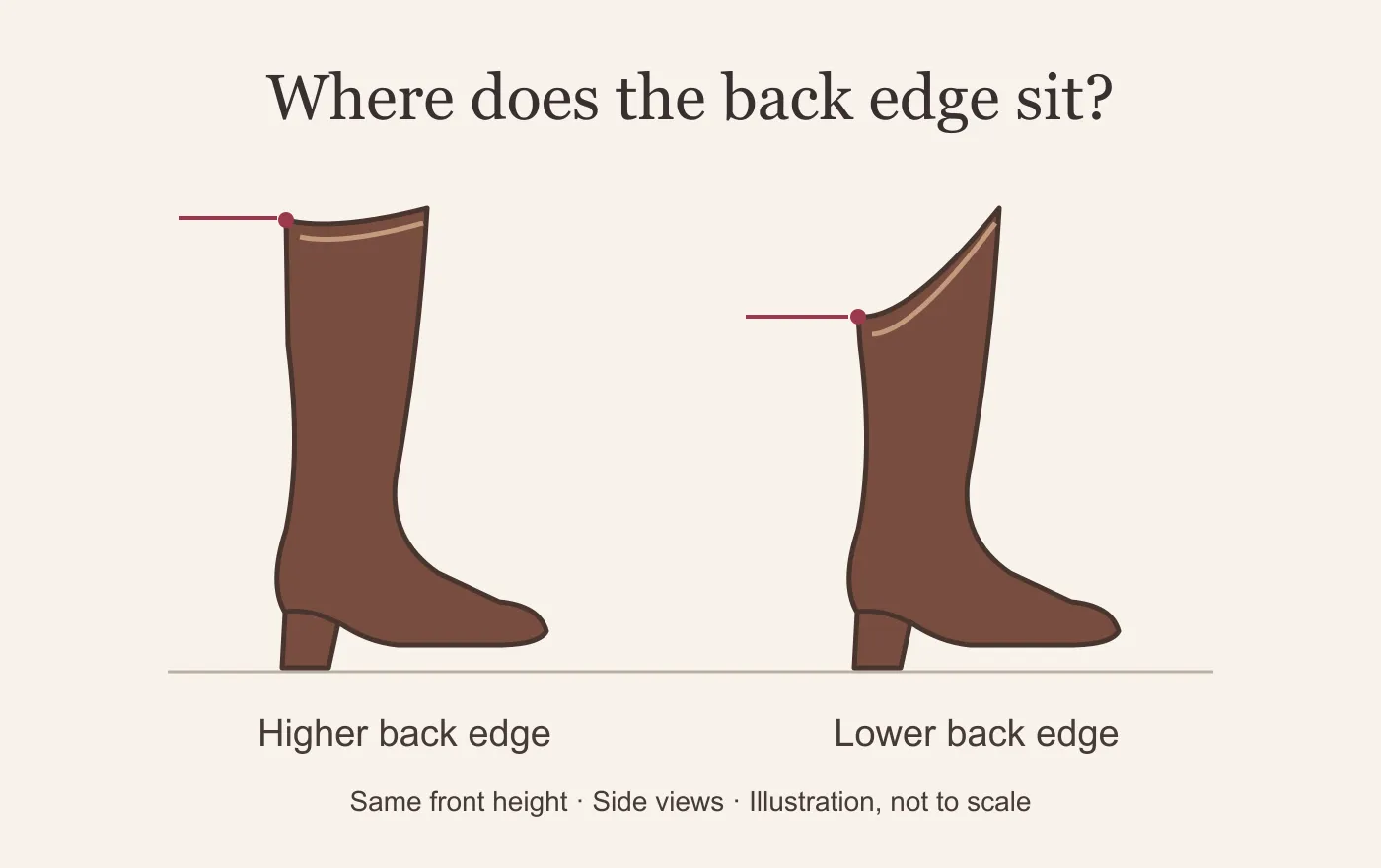

A pair of knee-high boots can feel lovely all the way across the shoe department and start digging into the back of your knee the moment you sit down. If your foot feels fine and the calf zips easily, look at the back edge of the boot first. A shorter shaft or a dip at the back may give your knee the room it needs when it bends. You can keep the tall line you like at the front.
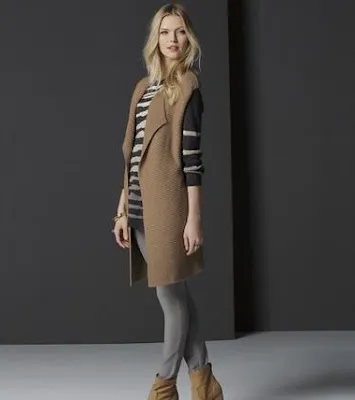
In November 2010, the original Flattering50 writer wore a zip sweater, a straight skirt, and slightly heeled boots to Thanksgiving. One reason she liked the store where she found them was that there was room to take a proper walk. Her account of shopping for those boots suggests a good starting point for a try-on. For a pair you plan to wear through dinner, borrow a chair, too.
Where does the boot catch?
Try both boots with the tights or socks you usually wear with your skirt. Walk a little, then take a seat with your feet resting on the floor. If a low chair is where you usually read or watch a movie, give the boots a turn there as well. Pay attention to the first place you feel pressure.
Right in the crease behind the knee? Run a finger along the back rim while seated. If the rim presses into the crease and you find yourself sliding your foot forward for relief, try a pair cut lower at the back. Look at the side photo when shopping online. Two boots can reach the same spot in front and leave quite different amounts of room behind your knee.
Across the fullest part of the calf? If the zipper takes effort there even while you’re standing, check the shaft circumference. Wrap a flexible tape around the widest part of each calf, keeping it level, and compare the larger measurement with the chart for that style and shoe size. Check what the chart labels: a suggested calf measurement describes your leg, while a boot circumference describes the boot. If the height feels good, a roomier calf in the same shoe size is worth trying.
Then put on the skirt you want to wear. A straight skirt that clears the boots when you stand can catch on the rim as you get up. Take a seat, stand, and let the hem fall on its own. If the boots feel good and only that hem hangs up, try them with a skirt you own that has a little more sweep before giving up on the pair.
Before ordering, measure a boot you would happily sit in
In a later Flattering50 story, the original writer found the brown, low-heeled boots she wanted in a store. The sale selection she saw online had black ones with a similar heel. Color is easy to compare on a screen. A number labeled shaft height takes a little more detective work.
Here’s the catch. Vince Camuto measures up the back of the boot from the top of the heel. Timberland starts at the instep, near the arch. If two listings give the same number, check where each tape measure started before treating the boots as equally tall. Vince Camuto’s sizing guide · Timberland’s measuring guide
Set a comfortable pair upright and measure one boot the way the seller measures theirs. If the listing gives a sample shoe size, check whether it matches yours. For a curved or uneven top, ask for the height at the center back in your size. A measurement to the highest point on the outside won’t tell you where the rim meets the bend in your leg.
If you’re replacing a pair you love, take one last side photo of the old boot with the tape in place. Keep it with the measurement on your phone. The next time a beautiful brown boot turns up in your size, you’ll have something better than “knee-high” to go on.